
Scotland’s Winter Holidays by Catherine McKinley


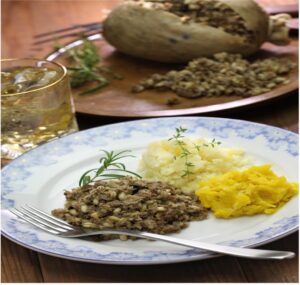
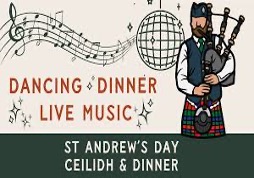
Honoring Scotland’s patron saint, St. Andrew’s Day traditions include celebrating Scottish culture, food and drink, attending ceilidhs (dances) with live music, and flying the Saltire flag. This flag features a white Saint Andrews Cross on a sky blue background. The day, celebrated on November 30th, is also the start of the annual Winter Festival and can include historical events and other local festivals like the Saltire Festival in East Lothian. A Saint Andrews Day Dinner involves the usual neeps (turnips), tatties (potatoes) haggis (sheep’s organs minced w/oatmeal) but is, also, likely to include lamb dishes especially muckle lamb pie.
Christmas
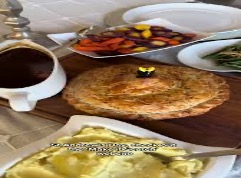
Father Christmas: Children leave a mince pie and a drink, like sherry or whisky, for Father Christmas, and a carrot for his reindeer (below L).
Food: Traditional dishes include clootie dumpling (a spiced fruit pudding), Scotch broth, and various Scottish cheeses. Haggis may also be included as a stuffing.
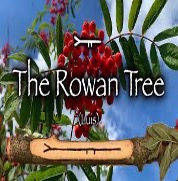
Rowan tree: Some people still burn a twig of the rowan tree at to clear away any bad feelings or bad luck between friends & family (below M).
Yule log: Burning a Yule log is an ancient tradition believed to bring good luck and to ensure the sun’s movement around the earth.
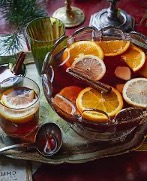
Wassailing: People sing carols as they go from house to house and might earn a cup from the Wassail (punch) Bowl (below R).

Hogmanay (Scottish New Year)
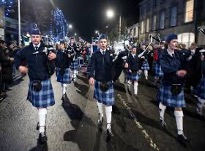
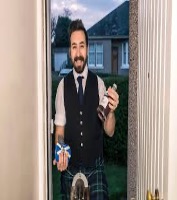
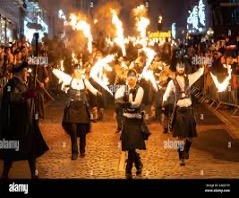
In Scotland, New Year (Hogmanay) is one of their primary holidays. Traditions include “First-Footing” (below L) or being the first to cross the threshold in the new year, often with symbolic gifts, singing “Auld Lang Syne (below M) after midnight, and fire ceremonies like Torchlight Processions and Fireworks (below R). Many traditions are tied to starting the new year with good luck and cleansing oneself from the old year’s bad fortune, like cleaning the house or clearing debts before midnight.
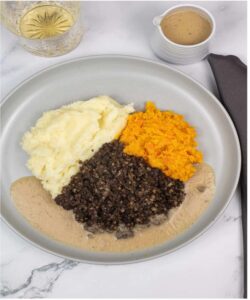
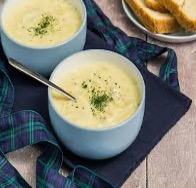
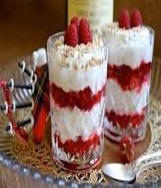
A traditional Scottish Hogmanay dinner often features haggis, neeps, and tatties, (below L) (turnips & potatoes) with steak pie being another hearty main course option. Lighter or alternative starters, smoked salmon or Cullen skink (below M), a creamy smoked haddock soup, are common choices. Desserts frequently include cranachan (below R), a mixture of whipped cream, whisky, oats, and raspberries, or a rich clootie dumpling.
Robert Burns Day
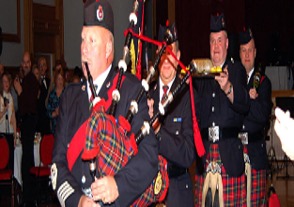
Celebrated on January 25th, Robert Burns Day honors the birthday of Scotland’s poet laureate and the composer of “Auld Lang Syne” (old long ago). The main event is a traditional “Burns Supper.” The menu features haggis, neeps, and tatties (L). Key traditions include the “Address to the Haggis” ceremony, various toasts (including the “Immortal Memory” and “Toast to the Lassies”), reading of Burns’ poems, and singing his songs. Guests often wear traditional Scottish attire, such as kilts. For Burns Suppers, the Haggis is piped in (R).